Don't miss our holiday offer - up to 50% OFF!

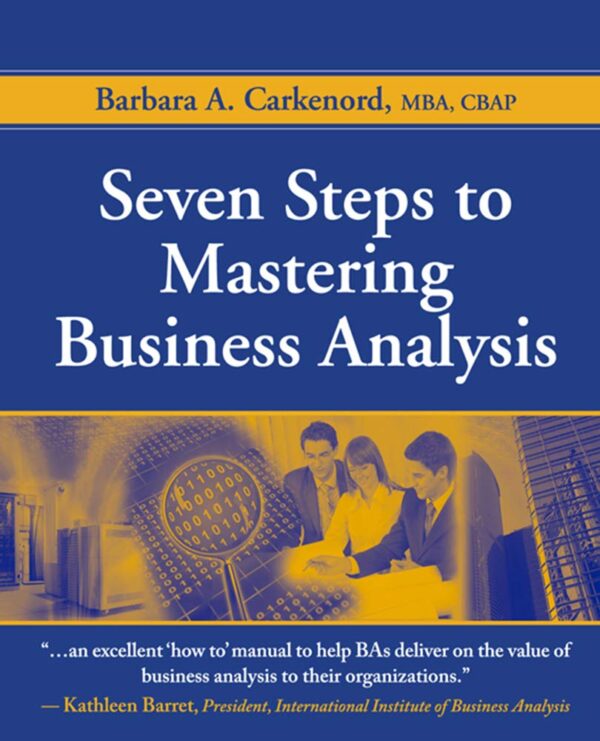
Seven Steps to Mastering Business Analysis
₹6284
Price: $69.95 - $38.00
(as of Jan 08, 2026 04:17:31 UTC – Details)
Seven Steps to Mastering Business Analysis
In today’s fast-paced and ever-evolving business environment, effective business analysis is more crucial than ever. The ability to gather, interpret, and leverage data can mean the difference between success and failure for organizations. Mastering business analysis is not only about understanding numbers; it involves a strategic approach to problem-solving and decision-making. Here are seven essential steps to help you become a master in business analysis.
Step 1: Understand the Role of a Business Analyst
Before diving into the technical skills, it’s vital to understand the role of a business analyst (BA). BAs act as a bridge between stakeholders, ensuring that business needs are clearly defined and addressed. This requires strong communication skills, a deep understanding of business processes, and the ability to visualize and articulate solutions. Familiarize yourself with the core responsibilities of a BA, which include requirement gathering, stakeholder management, and solution assessment.
Step 2: Develop Analytical Skills
At the heart of business analysis lies the ability to analyze data effectively. This involves more than just crunching numbers; it requires critical thinking and problem-solving skills. To strengthen your analytical abilities, engage in activities that challenge your thinking, such as puzzles, strategy games, or case studies. Additionally, consider taking courses in statistics, data analytics, or data visualization tools like Tableau or Power BI to enhance your technical proficiency.
Step 3: Learn Business Process Modeling
Understanding and modeling business processes is essential for any aspiring business analyst. Business Process Model and Notation (BPMN) is a standardized method to visually represent these processes. Familiarize yourself with different modeling techniques, such as flowcharts, swimlane diagrams, and value stream maps. Mastering these techniques will enable you to identify inefficiencies and recommend improvements effectively.
Step 4: Gain Knowledge of Industry Standards and Frameworks
Familiarize yourself with industry standards, best practices, and frameworks relevant to business analysis. The International Institute of Business Analysis (IIBA) offers the Business Analysis Body of Knowledge (BABOK), which outlines essential knowledge areas and techniques. Additionally, understanding methodologies like Agile, Scrum, and Six Sigma can provide you with the tools to adapt your analysis to various project environments.
Step 5: Enhance Communication and Interpersonal Skills
Business analysis is inherently collaborative. Effective communication is vital to ensure that all stakeholders are aligned and that requirements are accurately captured. Develop your interpersonal skills by practicing active listening, empathy, and negotiation techniques. Participate in team projects or workshops to hone your ability to communicate complex ideas simply and clearly. Building strong relationships with stakeholders will also facilitate smoother project execution.
Step 6: Utilize Technology and Tools
Incorporating technology into your business analysis practice can greatly enhance your efficiency and effectiveness. Familiarize yourself with various business analysis tools like Microsoft Excel, JIRA, Trello, and Confluence. These tools can help you manage projects, track requirements, and collaborate with teams seamlessly. Stay updated on emerging technologies, such as artificial intelligence and machine learning, which can provide deeper insights into data analysis.
Step 7: Seek Continuous Improvement and Feedback
Mastering business analysis is an ongoing journey. Regularly seek feedback from peers, mentors, and stakeholders to identify areas for improvement. Participate in professional communities, attend workshops, and pursue certifications to keep your skills current. Engage in self-reflection to assess your performance and set goals for personal development. Remember that the business landscape is continually changing, and staying adaptable is key to long-term success.
Conclusion
Mastering business analysis requires dedication and a multifaceted approach. By understanding the role, enhancing your analytical skills, learning industry standards, and improving communication, you can position yourself as a valuable asset in any organization. Embrace technology, seek continuous improvement, and remain curious about the business world around you. With these seven steps, you’ll be well on your way to becoming a proficient business analyst, ready to tackle the challenges of the modern business environment.



Reviews
There are no reviews yet.