Don't miss our holiday offer - up to 50% OFF!

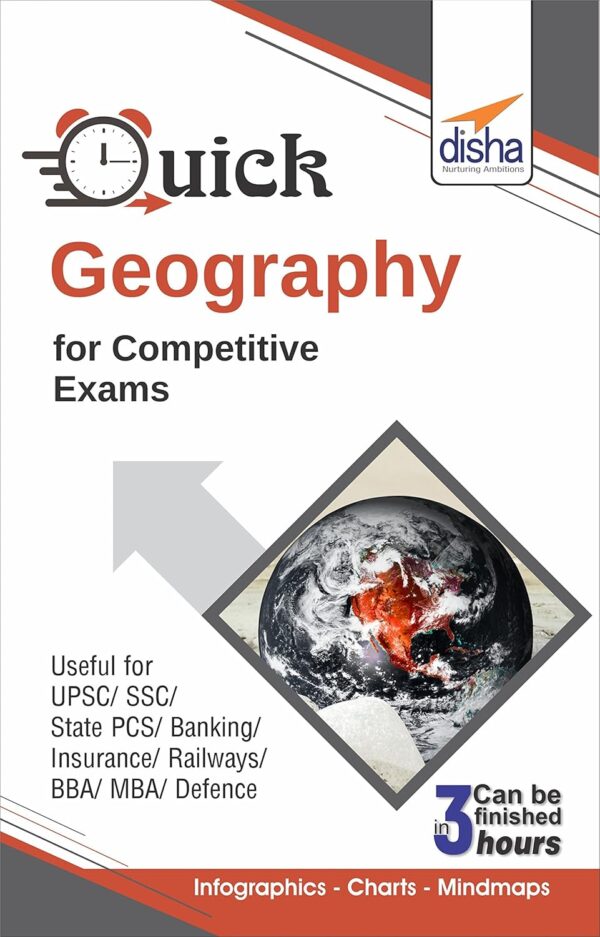
Quick Geography for Competitive Exams
₹257
Price: $2.86
(as of Jan 16, 2026 01:34:55 UTC – Details)
Quick Geography for Competitive Exams: Key Concepts and Tips
Geography is an essential subject for various competitive exams, including civil services, banking, and other government job recruitment tests. A solid understanding of geographical concepts not only enhances your overall knowledge but also boosts your problem-solving skills in various competitive contexts. Below is a concise guide covering fundamental geographical themes, important facts, and effective study tips to help you excel in your exams.
1. Understanding Physical Geography
Physical geography focuses on the natural features of the Earth. Here are some key topics to cover:
-
Landforms: Familiarize yourself with major landforms such as mountains, plateaus, plains, hills, and valleys. Understand their formation processes (e.g., tectonic activity, erosion, and sedimentation).
-
Water Bodies: Know the major rivers, lakes, and oceans. For instance, the Amazon River is the longest river by discharge, while the Nile is often referred to as the longest river in the world.
-
Climate Zones: Study the different climate zones (tropical, arid, temperate, polar) and their characteristics. Recognize how climate affects biodiversity and human activity.
- Natural Resources: Understand the distribution and significance of natural resources, including minerals, forests, and fossil fuels.
2. Human Geography Insights
Human geography examines the relationship between people and their environment. Key areas to focus on include:
-
Population: Learn about population distribution, density, and demographics. Key terms such as urbanization, migration, and population explosion are critical.
-
Culture and Society: Explore how culture, language, religion, and ethnicity affect geographical landscapes and societal structures.
-
Economic Geography: Familiarize yourself with various economic activities such as agriculture, industry, and services. Understanding regional economic disparities is also crucial.
- Political Geography: Grasp the concepts of geopolitics, boundaries, and territorial disputes. Key regions like the Middle East, South Asia, and East Asia are often focal points in competitive exams.
3. Maps and Spatial Awareness
Maps are vital tools in geography. Here’s what you need to know:
-
Types of Maps: Understand the difference between physical, political, thematic, and topographic maps.
-
Map Reading Skills: Practice interpreting maps, including understanding scales, symbols, and legends. Familiarize yourself with map projections and their uses.
- GIS (Geographic Information Systems): Although not always a focus in traditional exams, knowledge of GIS can provide an edge in understanding spatial data analysis.
4. Current Affairs and Environmental Issues
Stay updated on current geographical events and environmental challenges:
-
Climate Change: Understand the implications of climate change, including rising sea levels, extreme weather events, and biodiversity loss.
-
Natural Disasters: Familiarize yourself with the geography of natural disasters such as earthquakes, tsunamis, and hurricanes, including their causes and impacts.
- Sustainable Development: Learn about sustainable practices and international agreements aimed at protecting the environment (e.g., the Paris Agreement).
5. Study Tips for Geography
To effectively prepare for geography in competitive exams, consider the following strategies:
-
Create a Study Schedule: Allocate specific time blocks for geography study, ensuring a balanced review of physical and human geography.
-
Use Visual Aids: Employ maps, charts, and diagrams to reinforce concepts and enhance memory retention.
-
Practice with Mock Tests: Regularly take mock exams and quizzes to familiarize yourself with the exam format and types of questions.
-
Group Study: Discussing geographical topics with peers can deepen understanding and expose you to different perspectives and resources.
- Stay Informed: Follow geographical news through reliable sources to relate your theoretical knowledge to real-world scenarios.
Conclusion
Geography is a vast and dynamic field that combines both physical and human aspects of the world. For competitive exams, a focused and strategic approach to studying geography can significantly enhance your performance. By understanding key concepts, staying updated with current events, and practicing regularly, you can build a solid foundation that will serve you well in your examinations and beyond. Good luck!


Reviews
There are no reviews yet.