Don't miss our holiday offer - up to 50% OFF!


Mastering Grammar for Competitive Exams: A Parts of Speech A...
₹2246
Price: $25.00
(as of Jan 09, 2026 18:50:52 UTC – Details)
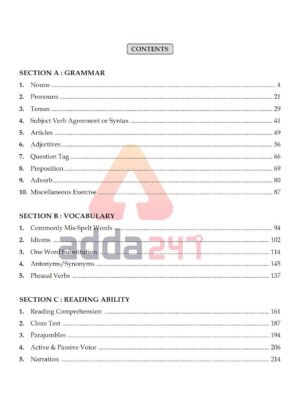
Mastering Grammar for Competitive Exams: A Parts of Speech Approach
In the realm of competitive exams, grammar often plays a pivotal role in determining a candidate’s proficiency in the English language. A solid understanding of grammar not only boosts one’s score but also enhances overall communication skills. One effective way to master grammar is through a focused approach on the parts of speech. This article delves into the significance of parts of speech and offers strategies for mastering them to excel in competitive exams.
Understanding the Parts of Speech
The English language comprises eight primary parts of speech: nouns, pronouns, verbs, adjectives, adverbs, prepositions, conjunctions, and interjections. Each part serves a unique function in sentence construction, and together they create the framework for effective communication. Here’s a brief overview of each:
-
Nouns: Nouns represent people, places, things, or ideas (e.g., cat, city, happiness). Understanding the different types of nouns—common, proper, collective, and abstract—is essential for sentence clarity.
-
Pronouns: Pronouns replace nouns to avoid repetition (e.g., he, she, it, they). Mastering pronouns involves knowing their correct forms and ensuring they agree in number and gender with the nouns they replace.
-
Verbs: Verbs indicate actions, states, or occurrences (e.g., run, is, become). A deep understanding of verb tenses and forms is crucial, as they convey the timing of actions.
-
Adjectives: Adjectives describe or modify nouns (e.g., beautiful, tall, interesting). They are essential for adding detail and specificity to sentences.
-
Adverbs: Adverbs modify verbs, adjectives, or other adverbs (e.g., quickly, very, well). They provide information about how, when, where, and to what extent an action is performed.
-
Prepositions: Prepositions show the relationship between nouns (or pronouns) and other words in a sentence (e.g., in, on, at). Mastery of prepositions is vital for conveying location, direction, and time.
-
Conjunctions: Conjunctions connect words, phrases, or clauses (e.g., and, but, although). They play a key role in constructing complex and compound sentences.
- Interjections: Interjections express emotions or exclamations (e.g., wow, ouch, hey). While less formal, they can enhance writing by conveying enthusiasm or surprise.
Strategies for Mastering Grammar through Parts of Speech
1. Identify and Categorize
Begin by identifying sentences from practice questions or texts and categorizing the words based on their parts of speech. This exercise enhances awareness of sentence structure and helps reinforce the function of each part.
2. Practice with Context
In competitive exams, grammar questions often require an understanding of context. Practice identifying parts of speech in varied contexts, such as reading comprehension passages or sentence correction exercises. This will improve your ability to discern subtle grammatical errors.
3. Utilize Flashcards
Create flashcards for each part of speech, including definitions, examples, and rules. Regularly reviewing these flashcards can reinforce your memory and understanding, making it easier to recall information during exams.
4. Engage in Writing Exercises
Write short paragraphs or essays focusing on using a specific part of speech. For instance, write a paragraph with an emphasis on adjectives or adverbs. This not only enhances your writing skills but also deepens your understanding of how each part of speech functions within a sentence.
5. Take Online Quizzes
Numerous online platforms offer quizzes and exercises tailored to the parts of speech. These interactive tools provide immediate feedback and can help you identify areas that need improvement.
6. Study Sample Questions
Review past competitive exam questions that focus on grammar. Analyzing these questions can provide insights into common grammar pitfalls and the types of errors that are frequently tested.
7. Collaborate with Peers
Joining a study group can be beneficial. Discussing parts of speech with peers allows for the exchange of knowledge, clarification of doubts, and exposure to different writing styles and grammatical uses.
Conclusion
Mastering grammar through a parts of speech approach is a strategic method for excelling in competitive exams. By gaining a thorough understanding of each part of speech and practicing its application in various contexts, candidates can significantly improve their grammatical proficiency. In turn, this mastery will not only enhance their exam performance but also empower them with essential communication skills for their future endeavors. Remember, consistent practice and a keen eye for detail are key to unlocking the intricacies of English grammar. Happy studying!



Reviews
There are no reviews yet.