Don't miss our holiday offer - up to 50% OFF!

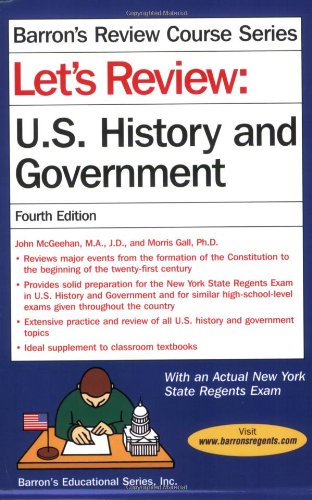
Let’s Review U.S. History and Government
₹754
Price: $8.39
(as of Dec 26, 2025 03:59:31 UTC – Details)
Let’s Review U.S. History and Government
The history of the United States is a rich tapestry woven from the threads of diverse cultures, ideologies, and events that have shaped the nation since its inception. Understanding U.S. history and government is essential not only for students but also for every citizen, as it provides context for contemporary issues and informs civic engagement. This article aims to review key themes, events, and structures that define U.S. history and government.
The Birth of a Nation
The United States’ journey began in the late 18th century, rooted in the desire for independence from British rule. The American Revolution (1775-1783) marked a pivotal moment, culminating in the Declaration of Independence in 1776, authored primarily by Thomas Jefferson. This document articulated the colonies’ grievances against King George III and laid the philosophical foundation for a new nation, emphasizing individual rights and government by consent.
Following the war, the Articles of Confederation were adopted in 1781 but proved inadequate due to their weak central government. This led to the Constitutional Convention of 1787, where the U.S. Constitution was drafted. Ratified in 1788, the Constitution established a framework for government that included a system of checks and balances among three branches: the legislative, executive, and judicial.
The Framework of Government
The U.S. Constitution is often described as a living document, adaptable to the changing needs of society. The Bill of Rights, comprising the first ten amendments, was added in 1791 to guarantee fundamental liberties such as freedom of speech, religion, and assembly. These principles remain cornerstones of American democracy.
-
Legislative Branch: Comprised of the Senate and the House of Representatives, Congress is responsible for making laws. The Senate consists of two senators from each state, while the House’s representation is based on population.
-
Executive Branch: Headed by the President, this branch is responsible for enforcing laws and managing the federal administration. The President also serves as the Commander-in-Chief of the armed forces and has the power to veto legislation.
- Judicial Branch: The Supreme Court and lower federal courts interpret laws and ensure they align with the Constitution. The judiciary has the power of judicial review, established in the landmark case Marbury v. Madison (1803), allowing it to invalidate laws that contradict the Constitution.
Major Historical Events
Throughout U.S. history, several events have profoundly influenced the nation’s trajectory:
-
The Civil War (1861-1865): A conflict rooted in issues of slavery and states’ rights, the Civil War resulted in the preservation of the Union and the abolition of slavery through the 13th Amendment. The Reconstruction Era that followed aimed to integrate formerly enslaved individuals into society, though it faced significant resistance and led to lingering racial tensions.
-
The Industrial Revolution: The late 19th and early 20th centuries marked a period of rapid industrialization, urbanization, and immigration. This transformation brought about economic growth and challenges, including labor rights issues, which spurred movements for reform.
-
Civil Rights Movement: The mid-20th century saw a concerted effort to end racial segregation and discrimination against African Americans. Landmark legislation, such as the Civil Rights Act of 1964 and the Voting Rights Act of 1965, emerged from this struggle, reshaping American society.
- Recent Developments: The 21st century has been marked by significant events such as the September 11 attacks in 2001, the Great Recession of 2008, and ongoing debates over healthcare, immigration, and climate change. These issues reflect the evolving nature of American democracy and the challenges that come with it.
Civic Engagement and Responsibilities
Understanding U.S. history and government is crucial for active participation in democracy. Citizens are encouraged to engage in civic duties, such as voting, attending town hall meetings, and advocating for issues that matter to them. Education plays a vital role in fostering informed citizens who can contribute to the democratic process.
Conclusion
Reviewing U.S. history and government reveals a complex narrative filled with triumphs and struggles. The lessons learned from the past are invaluable in shaping a better future. By understanding the foundations of American democracy, citizens can appreciate the freedoms they enjoy and recognize their role in preserving them. As the nation continues to evolve, the principles enshrined in the Constitution serve as a guiding light for navigating the challenges ahead.




Reviews
There are no reviews yet.