Price: $0.19 (as of Jan 14, 2026 10:41:36 UTC – Details)
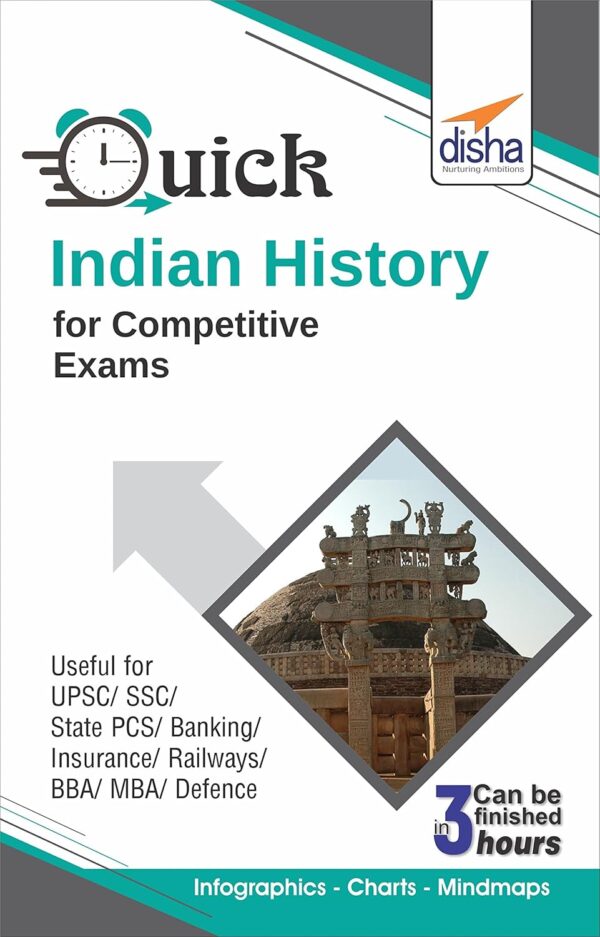
Quick Indian History for Competitive Exams
India, known for its rich tapestry of cultures, languages, and traditions, has a history that spans thousands of years. For students preparing for competitive exams, having a concise understanding of Indian history is crucial. This article aims to provide a quick overview of significant periods and events that are often tested in various competitive exams.
Ancient India
Indus Valley Civilization (c. 3300–1300 BCE)
The Indus Valley Civilization, one of the world’s earliest urban cultures, thrived along the Indus River. Key sites like Harappa and Mohenjo-Daro showcase advanced urban planning, drainage systems, and trade networks. The civilization is notable for its undeciphered script and decline due to unknown causes.
Vedic Period (c. 1500–500 BCE)
Following the decline of the Indus Valley, the Vedic Period emerged, marked by the composition of the Vedas, which are the oldest sacred texts of Hinduism. This era saw the rise of the caste system and the establishment of many principles that define Hinduism today.
Maurya Empire (c. 322–185 BCE)
The Maurya Empire, founded by Chandragupta Maurya, reached its zenith under Ashoka the Great. Ashoka is known for his promotion of Buddhism and non-violence after the Kalinga War, as well as for his edicts inscribed on pillars across the empire.
Gupta Empire (c. 320–550 CE)
Often referred to as the Golden Age of India, the Gupta Empire was marked by significant achievements in science, mathematics (including the concept of zero), art, and literature. This period saw the flourishing of classical Sanskrit literature, with notable figures like Kalidasa.
Medieval India
Delhi Sultanate (1206–1526)
The establishment of the Delhi Sultanate marked the beginning of Muslim rule in India. It comprised five dynasties: Mamluk, Khilji, Tughlaq, Sayyid, and Lodi. This period was characterized by significant architectural developments, including the construction of the Qutub Minar.
Mughal Empire (1526–1857)
The Mughal Empire, founded by Babur, is one of the most significant periods in Indian history. Akbar, Jahangir, Shah Jahan, and Aurangzeb were prominent rulers who expanded the empire. This era is famous for its cultural synthesis, notable architecture (like the Taj Mahal), and advancements in art and literature.
Colonial India
European Colonization
The arrival of European powers, including the Portuguese, Dutch, French, and British, marked the beginning of colonization. The British East India Company gradually gained control, leading to significant socio-economic changes.
First War of Independence (1857)
The revolt of 1857, often referred to as the First War of Independence, was a major, albeit unsuccessful, uprising against British rule. It marked a turning point, leading to direct British governance and significant reforms.
Indian National Movement
The late 19th and early 20th centuries saw the rise of nationalist movements. Key figures included Mahatma Gandhi, who advocated for non-violent resistance, and leaders like Jawaharlal Nehru, Sardar Vallabhbhai Patel, and Subhas Chandra Bose. The Indian National Congress played a pivotal role in mobilizing the masses against colonial rule.
Independence and Partition
Independence (1947)
India achieved independence from British rule on August 15, 1947, after a long struggle led by various freedom fighters. The independence of India was accompanied by the partition into two nations, India and Pakistan, leading to communal violence and mass migrations.
Republic of India (1950)
India adopted its Constitution on January 26, 1950, becoming a sovereign, democratic republic. Dr. B.R. Ambedkar is often credited as the principal architect of the Constitution, which enshrined fundamental rights and liberties for all citizens.
Conclusion
Understanding Indian history in a concise manner is essential for competitive exams. This quick overview highlights key periods and events, but students should delve deeper into specific topics for a comprehensive understanding. Mastery of Indian history not only aids in exams but also enriches one’s appreciation of the nation’s cultural heritage and identity. As you prepare, remember to focus on timelines, significant figures, and major events that have shaped India into what it is today.
Reviews
There are no reviews yet.
Be the first to review “Quick Indian History for Competitive Exams”Cancel Reply






Reviews
There are no reviews yet.