Don't miss our holiday offer - up to 50% OFF!

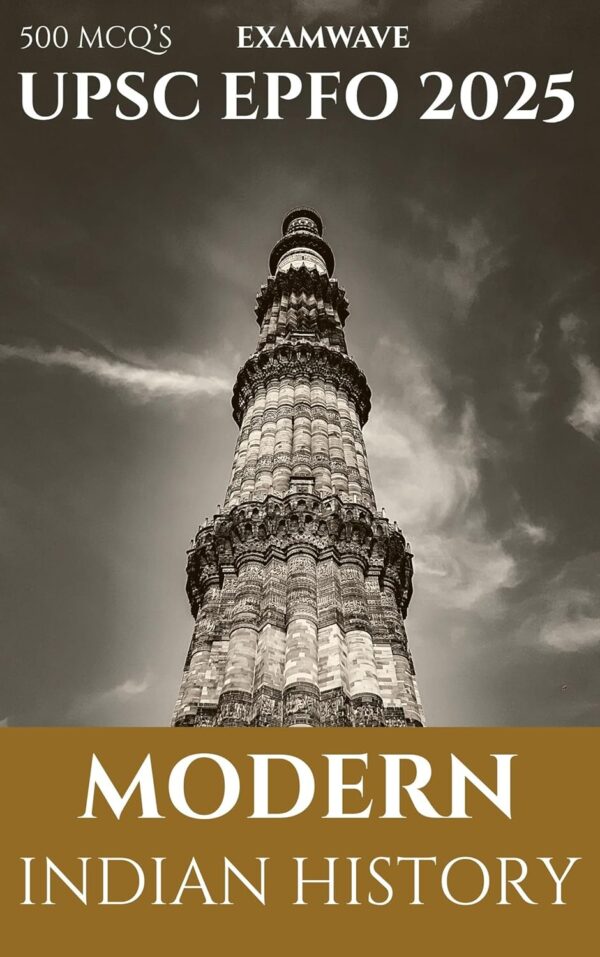
Modern Indian History (1757–1947) for UPSC EPFO & Com...
₹564
Price: $6.28
(as of Jan 10, 2026 12:28:54 UTC – Details)
Mastering Modern Indian History (1757–1947) for Competitive Exams: A Comprehensive Guide with 500 Solved MCQs
Modern Indian history, spanning from 1757 to 1947, is a crucial topic for various competitive exams in India, including UPSC EPFO, SSC, Defence, and State PSCs. This period marks significant transformations in India’s socio-political landscape due to colonial rule, freedom struggles, and the emergence of national consciousness. This article delves into the highlights of this transformative era and provides a structured approach to mastering it through 500 solved multiple-choice questions (MCQs).
Key Events and Themes in Modern Indian History
1. The Arrival of the British (1757-1857)
The modern history of India begins with the Battle of Plassey in 1757, which marked the establishment of British dominance in India. The British East India Company gradually expanded its control, leading to significant socio-economic changes. The revolt of 1857, often termed the First War of Independence, marked a pivotal moment, challenging British authority and leading to direct British rule.
2. Social Reforms and National Awakening (Late 19th Century)
The late 19th century witnessed a burgeoning social reform movement aimed at addressing the issues of caste discrimination, gender inequality, and social injustice. Reformers like Raja Ram Mohan Roy and Swami Vivekananda played significant roles in awakening national consciousness. This era also saw the formation of political organizations like the Indian National Congress in 1885, which became crucial in the struggle for independence.
3. The Freedom Struggle (1905-1947)
The early 20th century was marked by significant political movements aimed at securing independence from British rule. The partition of Bengal in 1905, the Jallianwala Bagh massacre in 1919, and the subsequent Non-Cooperation Movement led by Mahatma Gandhi in 1920 were critical milestones. The Civil Disobedience Movement and the Quit India Movement in the 1940s further galvanized the Indian populace against colonial rule.
4. The Role of Leaders and Ideologies
The freedom struggle was characterized by the contributions of numerous leaders, each bringing unique ideologies. Figures like B.R. Ambedkar, Subhas Chandra Bose, and Jawaharlal Nehru shaped the political discourse. The ideologies ranged from Marxism to nationalism, each influencing the direction of the freedom movement.
5. Independence and Partition (1947)
The culmination of the freedom struggle led to India gaining independence on August 15, 1947. However, this victory was bittersweet, as it was accompanied by the tragic partition of India and Pakistan, leading to widespread communal violence and displacement.
Preparing for Competitive Exams: 500 Solved MCQs
To effectively prepare for competitive exams, mastering Modern Indian History through solved MCQs can be highly beneficial. Here’s how to approach it:
1. Understand Key Concepts
Before diving into MCQs, ensure a solid understanding of the key events, dates, figures, and movements in Modern Indian History. This foundational knowledge will help in answering questions accurately.
2. Practice Regularly
Consistent practice is vital. Engage with a set of MCQs daily, focusing on different themes within Modern Indian History. This will enhance recall and comprehension.
3. Analyze Previous Year Papers
Review previous years’ exam papers to identify frequently asked questions and areas of focus. This analysis helps in prioritizing study topics.
4. Group Study Sessions
Participating in group study sessions can be highly effective. Discussing MCQs with peers allows you to gain different perspectives and clarifies doubts.
5. Time Management
While practicing MCQs, simulate exam conditions by timing yourself. This will improve your time management skills during the actual exam.
Sample MCQs
Here’s a glimpse of what the MCQs might look like:
-
Which battle marked the beginning of British rule in India?
- A) Battle of Buxar
- B) Battle of Plassey
- C) Battle of Panipat
- D) Battle of Haldighati
Answer: B) Battle of Plassey
-
Who was the leader of the Non-Cooperation Movement?
- A) Jawaharlal Nehru
- B) Mahatma Gandhi
- C) Sardar Vallabhbhai Patel
- D) Subhas Chandra Bose
Answer: B) Mahatma Gandhi
- What year did India gain independence?
- A) 1945
- B) 1946
- C) 1947
- D) 1948
Answer: C) 1947
Conclusion
Mastering Modern Indian History is essential for success in various competitive exams. By integrating a structured approach with 500 solved MCQs, candidates can enhance their understanding and retention of crucial historical events and figures. Remember, consistent practice and a thorough understanding of the subject matter are key to excelling in the examination. Good luck!

Reviews
There are no reviews yet.